Episode 1 · 2026-07-03
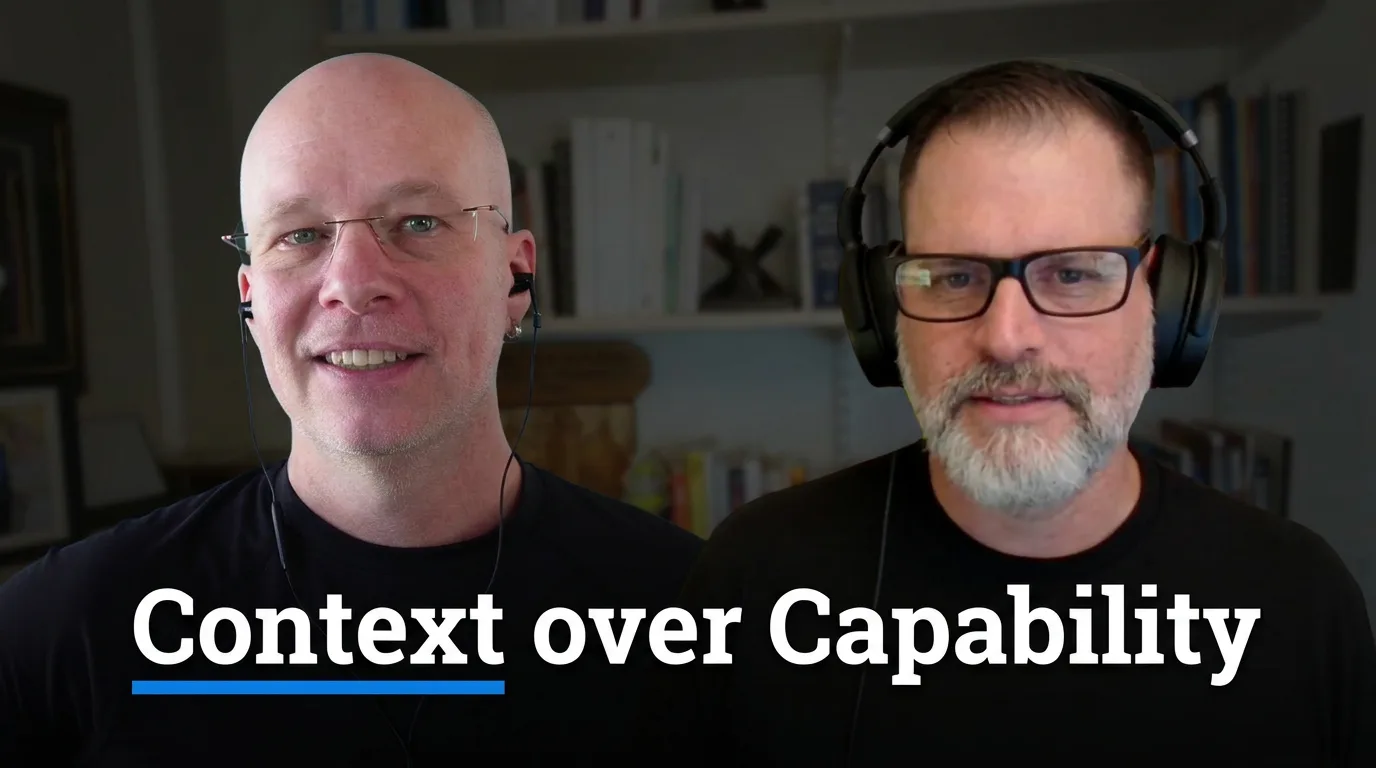
Context Over Capability
The debut. The newsletter becomes a live show.
Host Sam Rogers · cohost Lee Rodrigues · 26 min
A choice this episode can help with
When an AI system disappoints, do you need a better model or better context?
Run it on your own work: The One-Page Test, one page, any model.
The signals
- Lee: Context Over Capability. A one-page outline is the only thing that reliably shows you where the model is making stuff up. As capability climbs, the bottleneck stops being what the model can do and becomes what it knows about your situation.
- Sam: Supply and demand of work outputs and trust. Output volume is rising while trust in output falls. AI didn't invent slop; it dropped the cost of producing plausible-looking work to zero, so the slop that was always there is now everywhere and harder to spot.
The subtractions
- Lee: The Seven-Page Answer. Force it down to a one-page outline before you trust it. Plain text. No formatting, no bars, no just-in-case context. The one-page test exposes what the polish was hiding.
- Sam: Stop fixing slop with tools. Subtract the thing that actually makes slop: rewarding work that looks done over work that is reliable. The box-checking process is the target, not AI.
About this episode
Sam Rogers and Lee Rodrigues launch Signals & Subtractions as a weekly live show. What to watch this week, what to drop, and what this show is. In 26 minutes you get the cleanest version of the conversation: both signals, both subtractions, and the synthesis that ties them together, one move seen twice, force everything through a one-page outline before you trust it.
Want to bring your own signal and subtraction? Find yours. Mentioned on air, unpaid: PAICE.work.
Transcript
Read the conversation
Sam Rogers: Welcome to Signals and Subtractions Episode 1. I'm Sam Rogers, here with Lee Rodriguez from R&P Associates. Lee, would you tell the nice people of the internet about how and when we first met?
Lee Rodrigues: Well, the time was 2012, San Bruno headquarters at YouTube. I got brought in after having a comfy job at Apple teaching everyone how to edit video, being asked, can you come do instructional design video editing? And on my way in, one of the people I was working with said, By the way, they've hired five consultants in four weeks and fired every single one of Good luck. And then I met Sam and we talked about ten minutes about scripting and stories and realized I think together we can do this. I think we have the right people here to get this done. And we did.
Sam Rogers: Yes, and since then we've kept in touch. as we've both worked at the intersection of learning and performance, multimedia, IT, change management, both inside large organizations and startups. And on this show, we'll typically have a guest, but today being the very first one, it's just the two of us. I'm really glad that you're here. with me, Lee.
Put it to work
Where are you buying more capability to compensate for missing context?
The newsletter
Issue 58 · Sunday 5 July 2026 · sent on Substack and LinkedIn.
One signal, one subtraction, one analogy, in five minutes. It draws on this episode but stands on its own. Every issue.
The takeaway
The method from this episode, handed over whole: one page with its copy-paste prompt and JSON schema. Every takeaway.