Guests
Come tell us what broke.
Practitioners over pundits, every week.
The guest chair goes to people doing the work, not people describing it. The roles are fixed and the roster is not: most weeks it is host, cohost, and guest, some weeks host and guest, some weeks the host alone. The conversation is editorial and fast: you bring the story only you can tell, we use it to help an accountable operator make a better decision.
Who has been on
Every guest so far, newest first, each linked to the episode they made:
- Limited Edition Jonathan, the mad-science builder and creative. Ep 14: My Agents Can't Delete (2026-10-02)
- Omar Ladak, the owner who built for slow. Ep 12: Automating Toward Freedom (2026-09-18)
- Ankit Patel, the SMB owner. Ep 11: Before Signing That SaaS Renewal (2026-09-11)
- Paul Gibbons, the change consultant. Ep 10: Good Enough for Agentic Work (2026-09-04)
- Josh Felix, the manager rebuilding his reach. Ep 8: Influence Over Reach (2026-08-21)
- Douglas Hubbard, the measurement authority. Ep 7: Measuring Anything, Before the LLMs (2026-08-14)
- Michael Simon, the AI lawyer. Ep 6: AI Regulations and the Chatbot Laws Already in Force (2026-08-07)
- Limited Edition Jonathan, the mad-science builder and creative. Ep 5: AI Detection and the Presumption of Guilt (2026-07-31)
- Sabino Marquez, the trust value architect. Ep 4: Safety & Trust in the Age of AI (2026-07-24)
- Christine Rodrigues, the strategic planner. Ep 3: Job Search in the Age of AI (2026-07-17)
Who we book
- You have shipped something into production and seen it break.
- You own access to capital, distribution, or hiring-manager attention in your field.
- You can be precise about what matters and ruthless about what does not.
- You do not need media-training-style packaging. Real beats polished.
If what you have is a product to put in front of this audience rather than a story of what broke, that is the sponsor slot, not the guest chair. The sponsors page has the packages and the prices, so you can decide from the page.
What you bring
Three things, and we help you find them:
- One signal: Something you are tracking right now in your own work. Specific, recent, first-person.
- One subtraction: Something you actually stopped, killed, or refused. Made, not planned.
- Decision evidence: One consequential AI decision your experience can illuminate, and the evidence you would want before making it. We set the final episode question together. You do not have to arrive with a polished thesis.
Blank page? Use the method and the copy-paste prompt at https://sigsub.show/find-yours, it takes about fifteen minutes by hand, or five with the AI prompt. Once you confirm, we send a short prep doc that covers everything else.
What you get
A live conversation on a Wednesday, on YouTube and on Substack and LinkedIn as available. Then the episode lands on Friday, your signal, subtraction, and the decision they clarify carry into the Sunday newsletter, and shorts or clips follow when they serve the episode. We tag you on the surfaces where your moments appear. You also get a short close for one ask and one URL.
The permanent episode page lives on this site and is designed to remain a durable result associated with your work. It carries the full transcript, video, the central decision, an audience application question, your signal and subtraction in structured data that AI assistants can find and cite, and a share card built for link previews. See what that looks like: Episode 3 and Episode 4. Your episode is a portfolio artifact, not a puff of content.
Watch it work before you say yes
Two episode samples that jump straight to the parts that matter. Episode 2 is the method with nothing else in the room. Episode 3 is the fullest version of the room, all three chairs filled.
The thesis (Ep 2, solo)
| Jump to | What you get |
|---|---|
| 7:20 | What a signal is: a shift in your own work, recent, specific, first person. Not a headline, not a trend, not a tool. |
| 7:50 | The test that kills most first drafts: if a stranger could have posted it on LinkedIn, it is not yours yet. |
| 8:23 | The method worked live, out loud, from a blank page. This is the same fifteen minutes you will run. |
| 10:32 | What a subtraction is: past tense, made not planned, and it does not start as advice for other people. |
| 13:08 | Building the analogy that carries it (recurring meetings as for loops, no exit condition, nobody checking). |
Full episode: Ep 2, Find Your Signal, Find Your Subtraction.
The full setup (Ep 3, host + cohost + guest)
Guest Christine Rodrigues, cohost Lee Rodrigues, host Sam Rogers. When a cohost is in the rotation that week, this is how it runs.
| Jump to | What you get |
|---|---|
| 0:44 | How you get in: the cohost introduces you, then you introduce yourself in your own words. No cold-read bio. |
| 2:38 | The guest goes first. Christine takes her signal straight out of her own practice and reshapes the format while she is at it. |
| 9:02 | The handoff. Your pair does not sit alone; the cohost answers it with his own, and they sharpen each other. |
| 16:07 | What the room does with a good story: the small-town editor, the cruise-ship costume designer, corner cases over averages. |
| 24:27 | The close: one ask, one URL, on the record and in the show notes. |
Full episode: Ep 3, Job Search in the Age of AI. If you would rather see the two-voice version, host and guest only, watch Ep 4, Safety & Trust in the Age of AI.
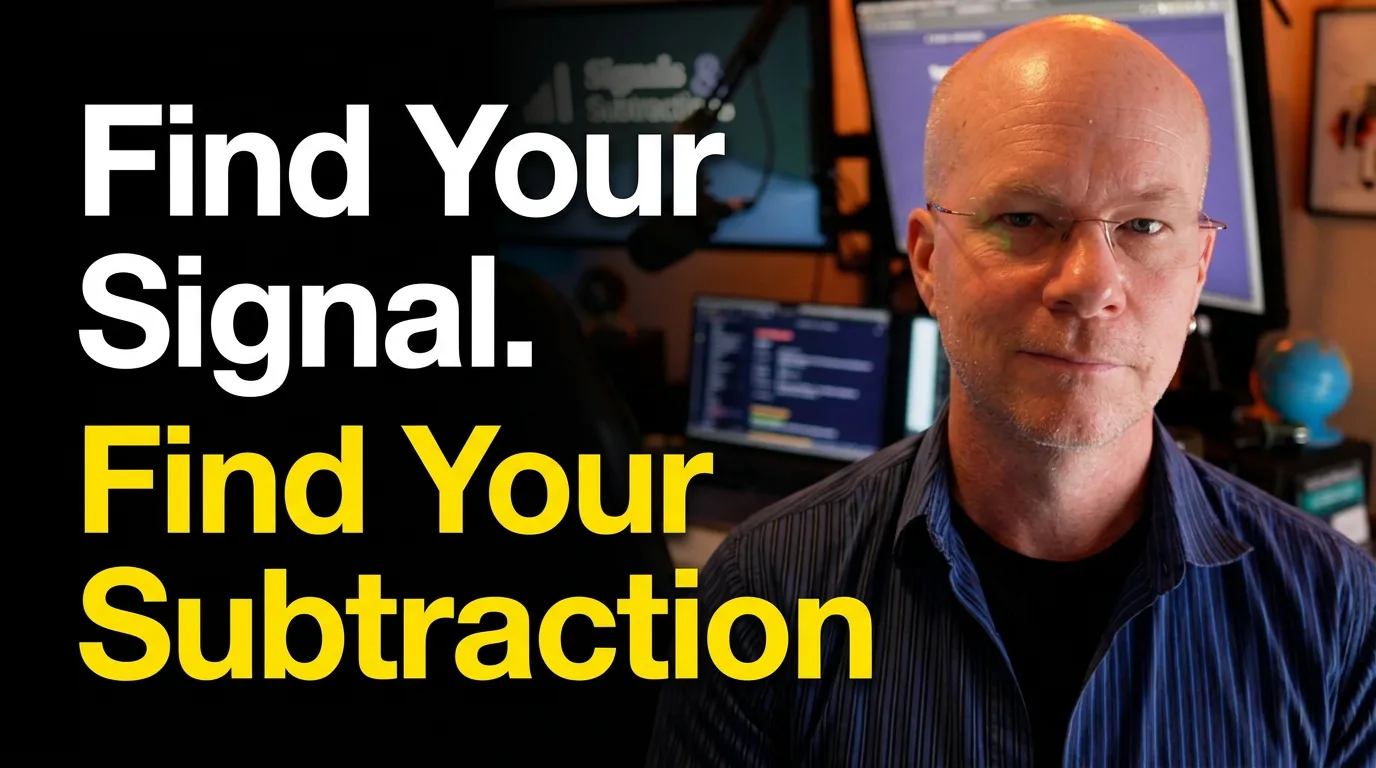 Ep 2 · 18 min
Find Your Signal, Find Your Subtraction
Ep 2 · 18 min
Find Your Signal, Find Your Subtraction
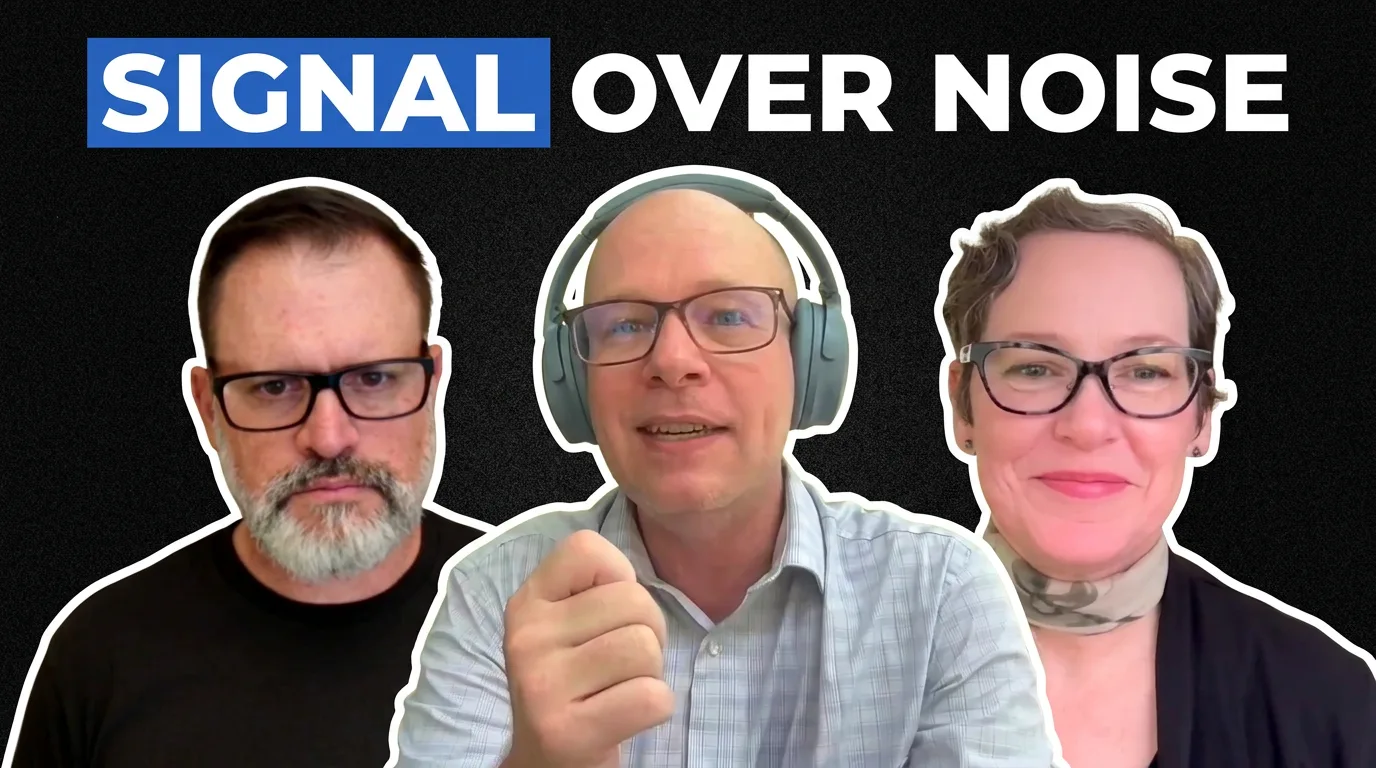 Ep 3 · 28 min
Job Search in the Age of AI
Ep 3 · 28 min
Job Search in the Age of AI
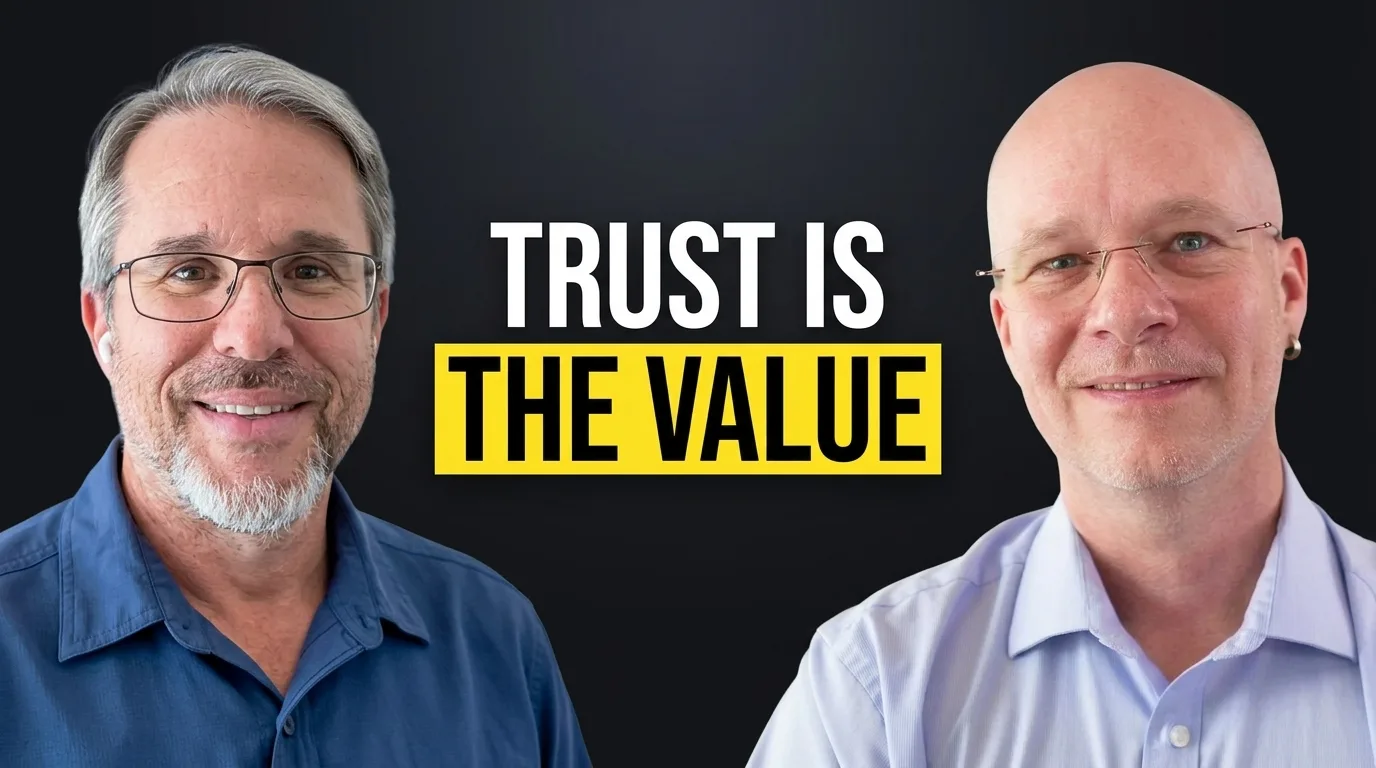 Ep 4 · 30 min
Safety & Trust in the Age of AI
Ep 4 · 30 min
Safety & Trust in the Age of AI
The livestream, the episode, and the edit
- The livestream is the live room, not the archive. Most weeks on Wednesday, on YouTube, Substack, and/or LinkedIn; some episodes are record-only or audio-only. The recording is shared until the episode is released on Friday, and then the episode replaces it. If you want your people to see it happen, tell them to come Wednesday.
- The episode is the one that lasts. Friday. That is the version on our episode page, in the podcast feed, and in your search results years from now.
- You get the cut first. This is not an approval right, and the final edit is the host's call. But if something is wrong, unclear, or lands harder than you meant, say so and we will look at it. We want you to look great and feel great sharing it out. Factual errors we fix, always.
Once you confirm, everything about being on air is in the prep doc, and the booking email carries the link. It is short on purpose. The terms you are agreeing to are their own page, ten plain points: sigsub.show/guest-terms. No contract, no signature. You reply "agreed" to the booking email and say yes out loud at the top of the session.
Get on the show
Warm intros beat cold pitches, but a sharp email wins either way: send your signal, your subtraction, and one consequential decision your experience could help someone make to hey@sigsub.show. Two sentences each is plenty. That is the whole pitch.