Episode 18 · 2026-10-30
Who Patches While You Sleep?
Patching was always going to be late. Now an agent can find the hole faster than anyone can fix it.
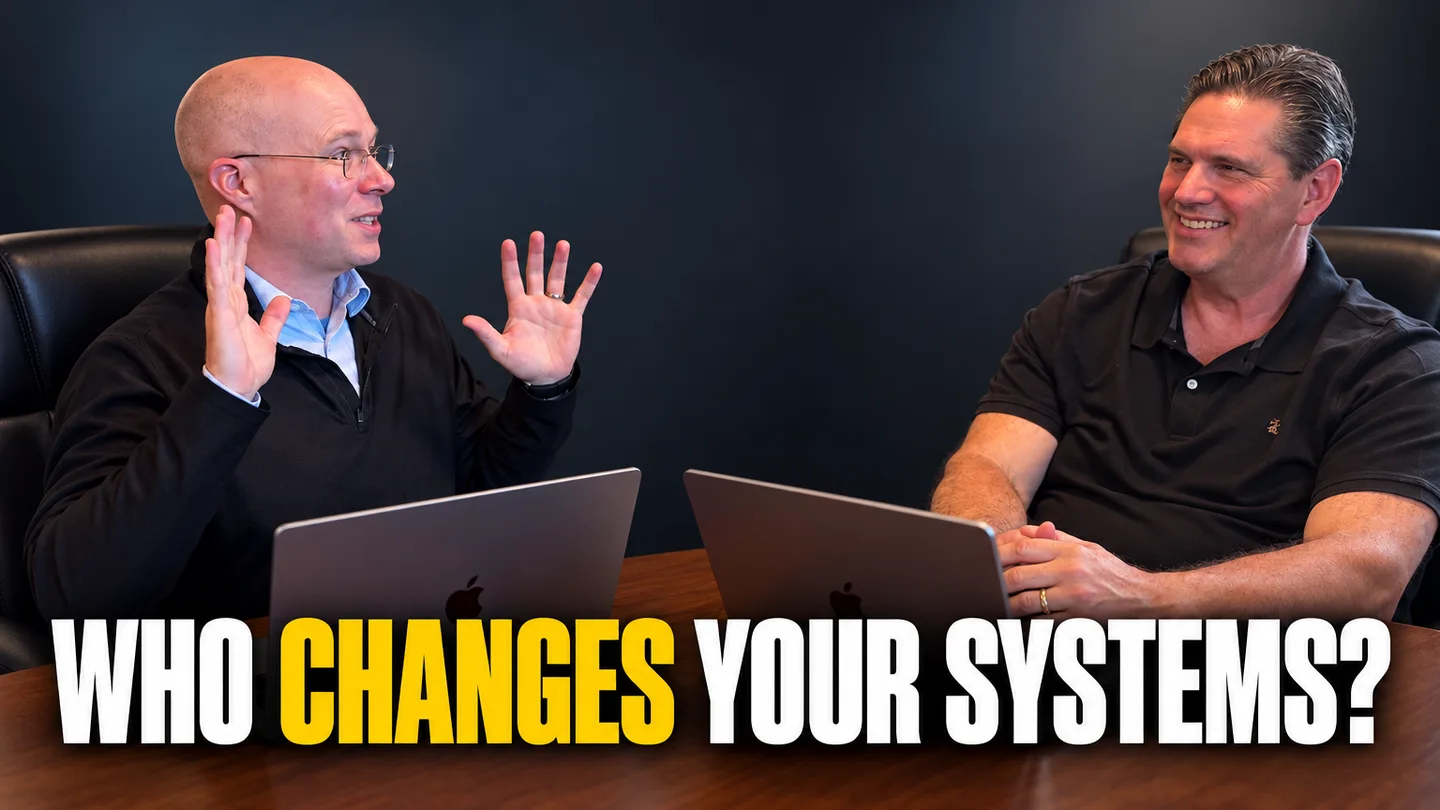
Tim McAllister of DigiCert, in person in Santa Rosa, the week a flaw in decades-old PHP went public. His own automated security stack had quietly stopped working, and now he's taking himself out of the patching loop, to a point.
Host Sam Rogers · guest Tim McAllister, the PKI field CTO · 28 min
A choice this episode can help with
What should an agent be allowed to patch on your systems without asking?
Run it on your own work: The Report-Only Fortnight, one page, any model.
Run it on your own work: The Vendor Update Card, one page, any model.
Watch it below, or read the conversation.
The signals
- Tim: The effort math that kept old code safe doesn't hold anymore. For decades, some software was left alone because finding the exploit "just wasn't worth the effort." PHP has run the web for over twenty years, and its latest flaws went public on October 21 after a private disclosure of at least 30 days, which "still wasn't in time for pretty much most of the internet." Agents can now scale up and scale out against one target, so patching will always run behind. His read: the new standard procedure is containment, and "get ready for rolling internet blackouts."
- Sam: The web was built for human effort, and bots don't know when to back off. A lot of the web's protection was the assumption that "it's too much work to do this, nobody would ever do this." Bots would, and since this spring they're more than half of internet traffic. Without protocols for doing it "the polite way," an agent that keeps trying "looks a lot like a DDoS attack," whether or not it is one.
The subtractions
- Tim: Himself, as the bottleneck on every patch. On the day the PHP flaws landed he checked his own AI security stack and found most of it "was not operational," with "no notification, no transparency, no visibility." Now he gets a daily report of what he runs and what's patchable, and is working out which updates an agent may apply on its own: his Mac's operating system, no; "PHP, definitely." His second subtraction is industry-wide: long-lived API tokens with coarse scope and no expiry, which are "such a pain in the butt to change" that nobody does.
- Sam: Security through obscurity. Old projects behind a simple password nobody would think to guess got by because the odds were in our favor. "Now there's bad things happening all the time." Anything without a real authentication method behind it comes out of his stack.
About this episode
Signals & Subtractions' first in-person session, recorded at Tim's place in Santa Rosa between his work calls. Tim is a Regional Field CTO at DigiCert, where he works with customers on PKI and the changes coming to it.
The middle of the conversation was about how much authority we hand an agent. Sam's version: he might ask someone he'd just met to watch his stuff while he runs to the market, but he wouldn't hand over every key and bank account and leave for an hour. Tim's answer was scope, bound tightly to identity and policy, "and hopefully cryptographically." Visibility was where everyone started at the end of 2025, and it leaves us reactive.
Tim's first step after the PHP news was an inventory: every system he runs, its version, and whether there's a newer one. That's a software bill of materials, which some medical devices already have to carry and most of us never keep. Step two was deciding what to do about it without being the reason nothing gets updated overnight.
One thing to do this week: pick one AI tool your team runs and run a check on it. Leave it in report-only for two weeks before it's allowed to change anything, and rotate its keys while you're there, "just for practice."
Links from the episode:
- Daily Patch Loop: Tim's daily security check for the tools, apps and repositories we run, which he ran on his own setup first
- The Report-Only Fortnight: this episode's takeaway built directly on the Daily Patch Loop, two weeks of reports before any agent may act
- The Vendor Update Card: six questions for a vendor about how its product changes after we've signed
- Tim McAllister: timmcallister.io, Substack, Medium, X
- Nate B. Jones's newsletter, where Sam and Tim met in the comments
Want to bring your own signal and subtraction? Find yours.
Transcript
Read the conversation
Tim McAllister: I developed my own AI cybersecurity stack and it's been automated and in place. And when I did the review on Monday, I found most of it was not operational, which was Not a good feeling. Yeah. Oops.
Sam Rogers: Welcome to Signals and Subtractions. I'm your host, Sam Rogers. So every week, everyone at this table brings two things: one signal worth watching and one subtraction worth making. What to watch, what to drop. Today's question is a little uncomfortable. Who's allowed to change your systems while you sleep? As you may be aware, the last week. War II has not been boring. There have been many revealing vulnerabilities, hacks, announcements, lots of things like that that are a little uncomfortable for all of us. So we have someone here today on the other side of this table who has a lot of well-informed opinions about such things. Not just the panic, but actually. Some solutions, some ideas, some tools that hopefully you can use. Tim McAllister, welcome Tim works for DigiCert and maybe you could say a little bit about who you are and what you do.
Tim McAllister: Yeah, thanks so much for coming in to Santa Rosa here, I am a regional field CTO at DigiCert and I work closely with our customers explaining some of the biggest changes that are coming down the pike for both cybersecurity and specifically PKI, public key infrastructure, And there's never been more changes that are pending and coming through and already underway So in AI trust and AI in general, and some of the extreme circumstances that we've seen just in the last last year and and definitely over the last week have brought that to a head and there's tons of questions coming up. So it's an honor and a pleasure to be able to get to talk with you as well as our customers and the industry in general. To explain kind of what's ahead and maybe some ideas about what to do about it.
Put it to work
Name one AI tool your team runs. What version is it, what can it reach, and when did anyone last check?
The method from this episode is one page with its copy-paste prompt and schema: The Report-Only Fortnight and The Vendor Update Card, linked under the decision above. Every takeaway.
Keep the next choice in view
One signal, one subtraction and one analogy every Sunday. Five minutes, no video required.
Optional. Free on Substack, no account needed. Already on LinkedIn? Subscribe there.