About
What to watch for. What to drop now. Every week.
What ships, who is on it, and why any of it exists.
What this is for
Everyone has a list of what to adopt. Almost nobody has a list of what to stop.
Organizations get handed the additive half of every AI decision and left to work out the rest alone. The pitch, the pilot, the rollout: all of it tells you what to add. Nothing tells you what to take out to make room, or how you would know whether adding it worked.
So we build the second list in public, one week at a time, until naming what you cut is as ordinary as naming what you bought.
That is the whole ambition, and deliberately not a bigger one. This show does not predict the future of AI, rank tools, or explain the news. It helps people accountable for a consequential AI decision make it with something better than vibes, by treating what an operator stopped as evidence worth the same airtime as what they started.
The shape of every episode
One signal. A shift someone personally saw in their own work. Recent, specific, first-person. Not a trend, not a tool review.
One subtraction. Something they actually stopped, killed, or refused because the world changed. Past tense, already made, and it cost them something.
Every episode carries at least two of each, because the pair is the point. A signal alone is an observation. A subtraction alone is a confession. Together they are a change of mind with the receipts attached.
Around them sits one consequential decision, named at the top, that an accountable person actually has to make. The episode does not answer it. It gives you the evidence, the counterexample, and what someone with your problem did instead.
What ships each week
Four artifacts across three days, and they are not versions of each other. The takeaway releases with the episode, which is a scheduling fact rather than a smaller role.
| When | What it is | How long it lasts | |
|---|---|---|---|
| Livestream | Wednesday | The conversation as it happens. Ask questions, get answers on air. | Temporary. It comes down when the episode ships. |
| Episode | Friday | The durable cut, on YouTube, in the podcast feeds, and here. | Permanent. If you take one thing, take this. |
| Takeaway | Friday, with the episode | The method from the episode, as one page you can run. | Permanent, and free. |
| Newsletter | Sunday | Not a recap. Its own piece of writing, five minutes, no video required. | Permanent, on its own counter from issue 001. |
A takeaway is the method from the episode, made runnable: an inventory, a card, a drill, or a small tool, on one page, with a schema and a copy-paste prompt. It never fills in the field the whole exercise is about. Emptiness is the finding, and a tool that answers the question for you has removed the only part that was going to change anything.
Checkable, by people and by machines
A show that asks you to name the evidence owes you evidence you can check.
So everything here is readable twice: once by you, and once by whatever you point at it. Full transcripts. A JSON API. An MCP server you can download and run, so an assistant can search the archive, pull a transcript, or hand you the pairs without going through us at all. The takeaways ship their schemas. The rights are stated plainly rather than assumed.
All of it is free right now: the livestream, the episode, the newsletter, the whole archive, every takeaway. No signup, no gate, nothing withheld.
That is not generosity. An argument you cannot audit is just an assertion delivered confidently, and a method you cannot reach is not a method you can test.
Who is on it
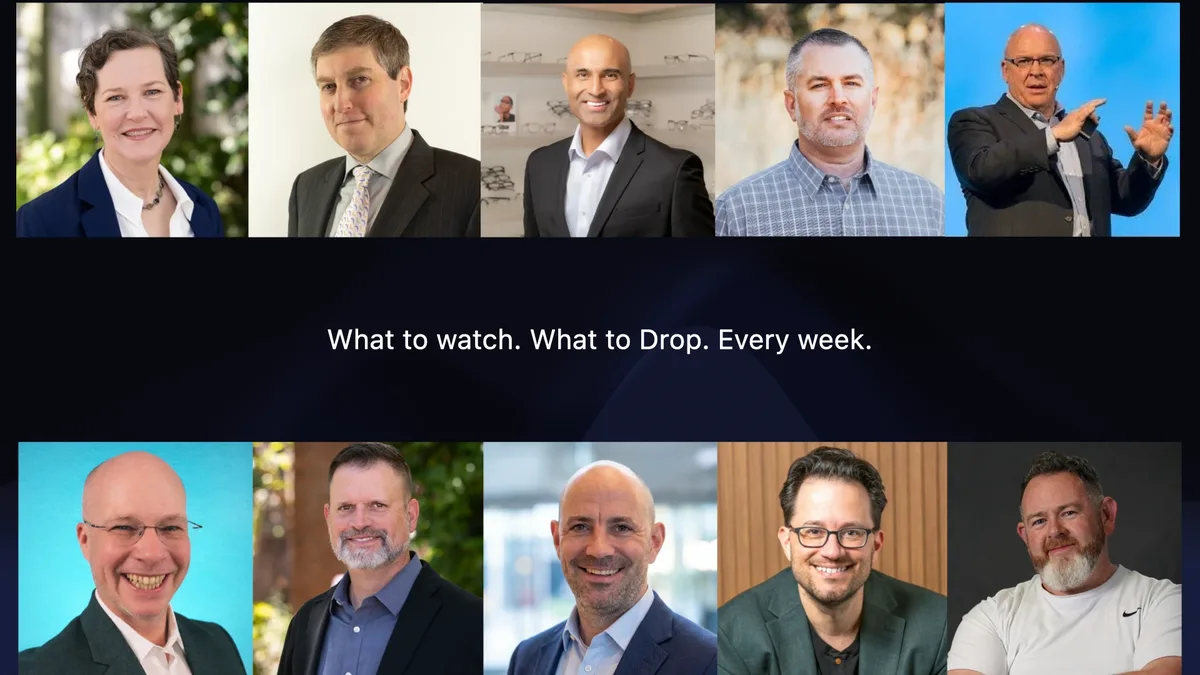
The host. Sam Rogers is in the chair every week. He names the decision, connects the pairs, and closes the loop. When both other seats are full he gives up his own signal and subtraction to make room.
Cohosts. A rotating seat rather than a sidekick. A cohost brings their own pair, and their real job is to pressure-test the episode's decision from a different operating context: to say what evidence would change the answer. They bring their own guests too. Who they are.
Guests. Practitioners over pundits. People who shipped something, watched it break, and can be precise about what actually mattered. Who has been on.
Nobody is here to be impressive. The bar is first-person and specific, which is harder than expertise and much easier than fame.
How to use it
Take whichever artifact fits your week. Then do the part that matters: find your own pair. There is a fifteen-minute method and a copy-paste prompt on that page, and the strongest fifty-seven from the archive to calibrate against.
If an episode's decision is one you are actually facing, say so. That conversation is the point of the show.
Signals & Subtractions is owned by Snap Synapse LLC and hosted by Sam Rogers.
How it got here
June 2025: a newsletter. The first issue went out on 6 June 2025. No show, no video, no takeaway. Just the discipline: one signal worth watching, one subtraction worth making, every week. The pair was not designed for a show. It was the shape the writing kept taking, because naming what you stopped turned out to be the harder and more useful half.
Fifty-seven issues. It ran alone for thirteen months, to issue 057 on 29 June 2026. That archive is all still here, at the same addresses as everything since. Worth saying plainly: the show came out of the newsletter, not the other way round. The format had fifty-seven weeks of use before anyone pointed a camera at it.
July 2026: the show. Episode 1 recorded on 1 July 2026. The reason to add it was not reach. A signal and a subtraction get sharper when someone who disagrees is in the room, and sharper again when a guest has to defend what they stopped in front of the person who lives with it. Writing cannot do that. A conversation can. The newsletter kept its own counter, which is why issue 058 accompanied episode 1 rather than restarting at one.
September 2026: the takeaways. Twelve episodes in, the pattern was hard to miss. The strongest episodes had a method in them, not just a story, and the question afterwards was always the same: how do I run that on my own situation? So the methods came out and became pages you can use, published in a batch on 17 September 2026. The rule they were built under took longest to work out, and it is the one on this page already: a takeaway may harvest, describe and enumerate, and never fill in the field the exercise is about. A tool that answers the question for you has removed the only part that was going to change anything.
What is next is not decided. The show is still finding out what it is. That is on purpose, and it is why this page describes what happens rather than what is planned.