The newsletter · Sunday 13 September 2026
Swiss Army Knife or Scalpel?
The answer cuts both ways
One signal 📡 One subtraction ➖ One analogy 🇨🇭
Created by Sam Rogers of Snap Synapse | Episode 11 with guest Ankit Patel | The Sunday newsletter of the weekly show at sigsub.show
A choice this issue can help with: When the renewal comes up, do you re-sign, renegotiate, or build the replacement yourself?
🇨🇭 Analogy: Swiss Army Knife
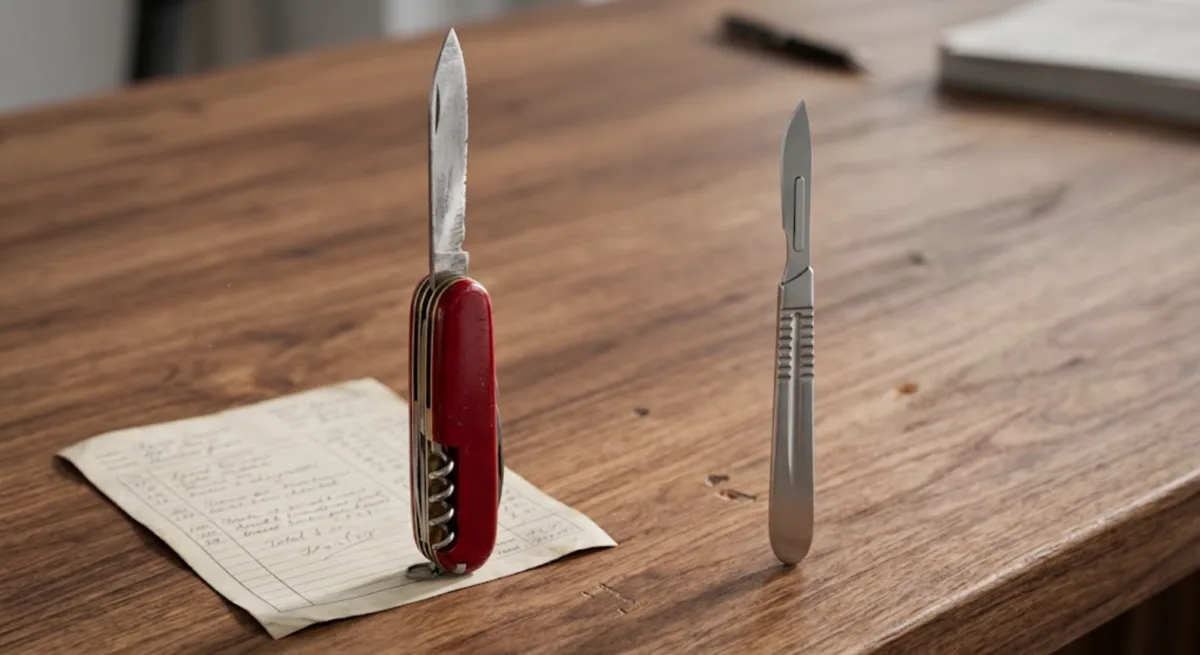
This week's guest, Ankit Patel, looked at what he was actually using on a marketing tool costing him about $1,900 a month. Then he called and asked to pay for that part, monthly, rather than the whole thing a year at a time. The answer was that they sell the package, and it's a full year or nothing.
That isn't a vendor being difficult. That's what they sell, and it's the Swiss Army knife approach: the blades are fixed at the factory, and the renewal is the moment we re-accept the whole arrangement, usually without opening it to see which ones we've been reaching for.
Ankit's waste is their margin.
📡 Signal: Both ends of the same trade
Ankit's own clients had asked him the same question first. They love the package, they told him, but they believed they could get about 30 percent of it from software they already pay for, and their own team can absorb the other 70. In our interview, he's careful not to argue the point. Leave aside whether it's a good idea, or how well they'd do it: their impression is that it's good enough.
That didn't cost him an account. It repriced one. To stay competitive meant cutting overhead, which is what sent him to his own invoices in the first place. His company runs around 60 people and was bigger this time last year. "It definitely caught my pocketbook."
People call this the SaaSpocalypse, a word that pictures software companies dying. What actually happened here is that the same trade ran at both ends of one company in the same quarter. His clients unbundled him, and he unbundled his vendor. Nothing died. The margin moved, and it moved toward whoever could act modularly better and optimize for what matters to the client. In this week's episode, Ankit tells the story of how he used this opportunity to improve services for his clients at lower cost via AI and open source solutions.
▶️ Watch, read, or listen
Watch the full episode: YouTube. Every format in one place, including the complete transcript: sigsub.show/episodes/ep-011. Also on Substack and LinkedIn.
Jump to a segment: I can get 30 percent of it now · I don't want to sign a year-long contract · a Swiss Army knife when you need a scalpel · zero to sixty on a bumpy road · decisions sitting there like lit fuses
➖ Subtraction: The knife you built yourself
I was holding a Swiss Army knife of sorts too, except I'd made mine. Nine months of blades and corkscrews and tweezers all added one at a time: a decision layer in my own notes where pre-made decisions sat as lit fuses, and unless I acted, the default fired. The idea was to predecide things in a way that allowed me to pivot faster, with clearer peace of mind. And I found out it didn't come apart when I was unexpectedly away for a week. But then it kept on opening and slicing on its own, only on approvals made under circumstances that no longer held.
The Swiss Army knife you build yourself leaves no one to negotiate with at all.
Ankit's went better, and the shape is why. One experiment, on one tool, not knowing how it would turn out. It landed ahead of the month of transition he'd planned, and his help desk got measurably faster and better rather than worse.
The diagnostic this week: the counterparty test. For anything that renews or fires on a default, name who you'd call to change it. If the answer is you, there's no negotiation. There's a decision you aren't making.
🧰 Put It to Work
The savings were real, roughly $2,300 to $2,500 a month for Ankit's business, about a tenth of the SaaS budget. The sequence is the part worth stealing. One success bought the second and the third, a shared inbox and then an open-source virtual office. None of that was on the table the day he made the call to negotiate with a key vendor. It arrived the moment one experiment came back with a result.
His caveat is the load-bearing one, and it's why this isn't a dare: the speed came from blocks already in place, the CLIs, the keys and tokens done properly, the hosting. We can't expect to go zero to sixty fast on a bumpy road.
So run the counterparty test on one line item, then take the choice this episode can help with. What is the next renewal on your calendar, and what would have to be true for you not to sign it? Send me your answer, or bring the choice itself to the show.
Next, the same ground from the other direction: what's worth keeping once the cutting is done?
Good luck,
Sam Rogers Knife Sharpener
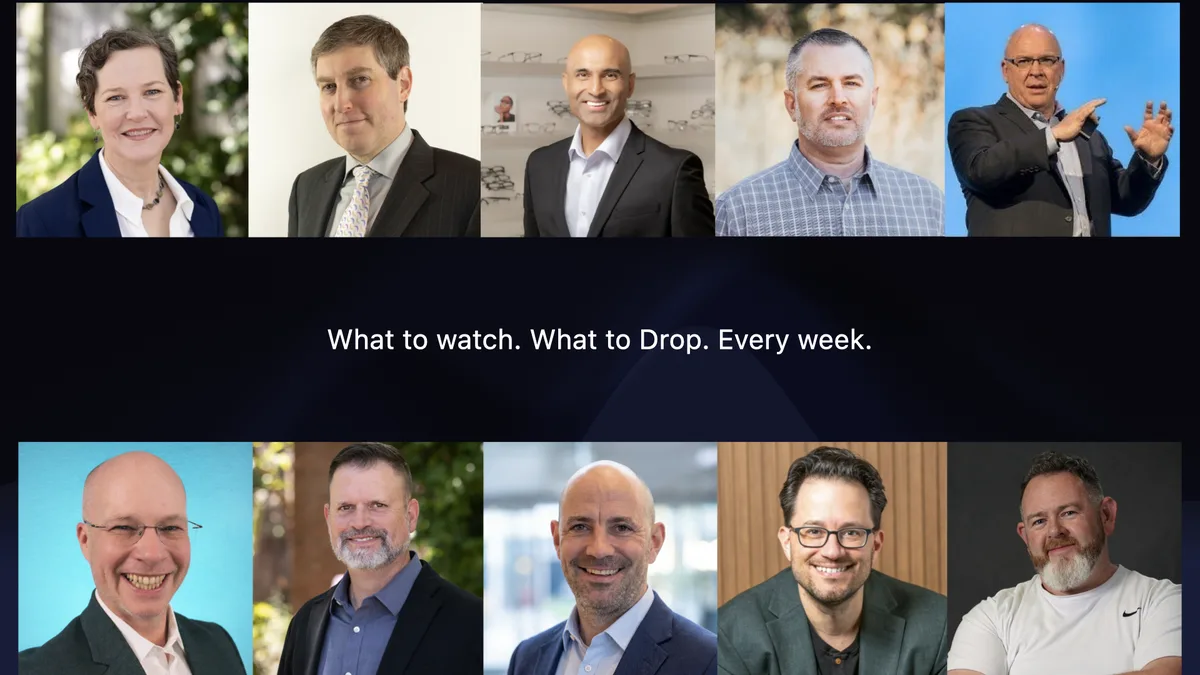
New here? Subscribe at sigsub.show and the next episode lands in your inbox.
This week's guest: Ankit Patel, industrial engineer turned operator, running Classic Vision Care and My Business Care Team in Atlanta, the community iCare Grow, and the podcast Optometrists Building Empires. Mention the show if you connect.
Related reading:
- Intelligence: Rent or Own? (054): stop defaulting to rented frontier AI for stable, recurring workloads. The same trade as this week's, one layer down the stack.
- Solution Shapes (053): teams buy the familiar big-platform shape instead of the right-sized fix. Written before testing the smaller one got cheap.
- No Wrong Answers (067): last week argued that a measure which can't fail isn't evidence. Ankit ran the experiment that could have come back wrong, and it's the reason the rest of it followed.
Get the next one
Free weekly newsletter on Substack. No account needed.
One signal, one subtraction, one analogy, every Sunday. Every issue, back to 001.