The newsletter · Sunday 23 August 2026
No Self-Checkout
AI made ideas free and reach free, so the biggest room stopped being worth winning. The scarce move is influence.
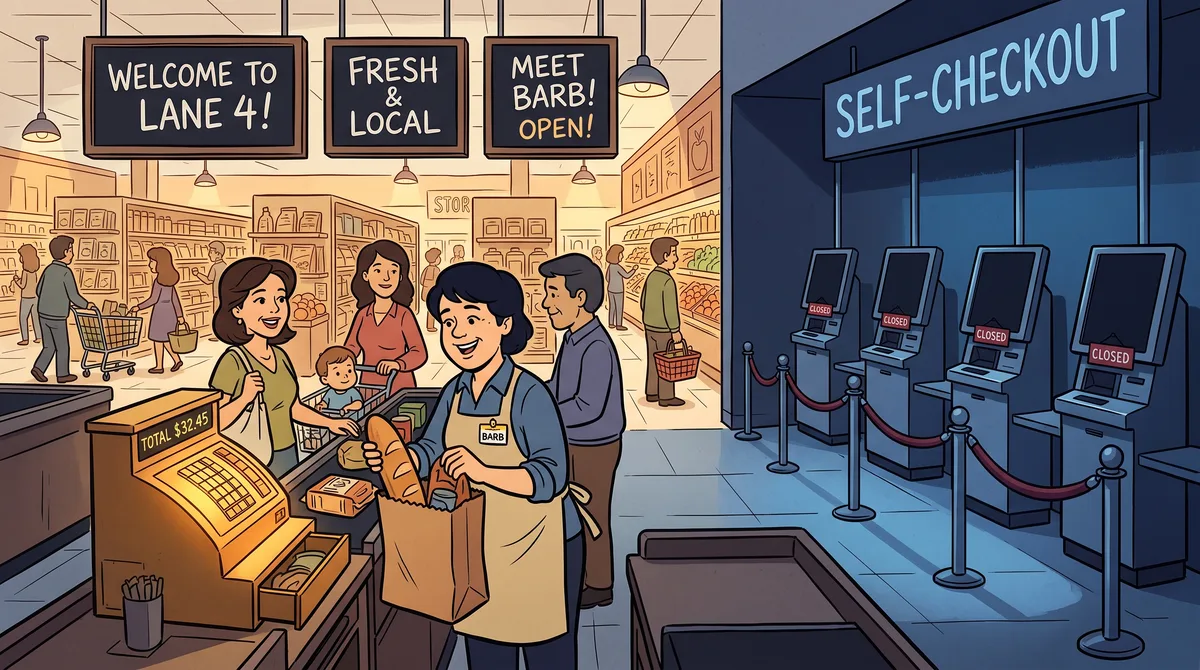
One signal 🔭 One subtraction ➖ One analogy 🛒
Created by Sam Rogers, building PAICE.work | Episode 8 with cohost JD Dillon & Josh Felix | The Sunday newsletter of the weekly show at sigsub.show
🔭 Signal: Everyone Has Ideas
The thing that used to make you valuable in a meeting was having the idea. You'd done the reading, knew the landscape, and when the room got stuck you were the one who could say what to do next. That was the job.
AI repriced it. Anyone in that room can now ask Claude or ChatGPT and get a workable version of your idea in ten seconds, badly formatted and full of dashes, but workable. JD Dillon, in the cohost chair for the first time this week, said the uncomfortable part out loud: more and more, people are quietly thinking "why do I need you for this?"
What is scarce now is getting the right person to actually move: to pay attention, reconsider what they believe, and decide something different. JD calls that influence, and he thinks it is the most valuable skill left standing, hiding under a decade of the "we need a seat at the table" talk. No, you do not need that seat, you just need representation at the table. You have that. What you need is your representative there, and everyone else, pulling in the same direction.
When the idea is free, the person who can move the room is the whole job.
➖ Subtraction: The Biggest Room
For years JD picked his conference talks by the size of the room, and I did too. Biggest audience, most exposure, most impressions. That's not nothing, there's real awareness in a big room. But we both stopped, because we'd rather have the right ten people in the seats than the wrong thousand. Reach was the metric, influence was the goal, and the reach itself was quietly working against it.
Cut the reach reflex. Run the one-name test: take the last ten things you put out, a post, a deck, a pitch, a memo, and for each one name the single person it needed to move. If the honest answer for most of them is "everyone," you were likely not influencing anyone. Though it takes real effort, it doesn't quite count as work.
Reach is who might see it. Influence is who changed their mind. Only one of them shows up in the actual decision.
Watch, read, or listen
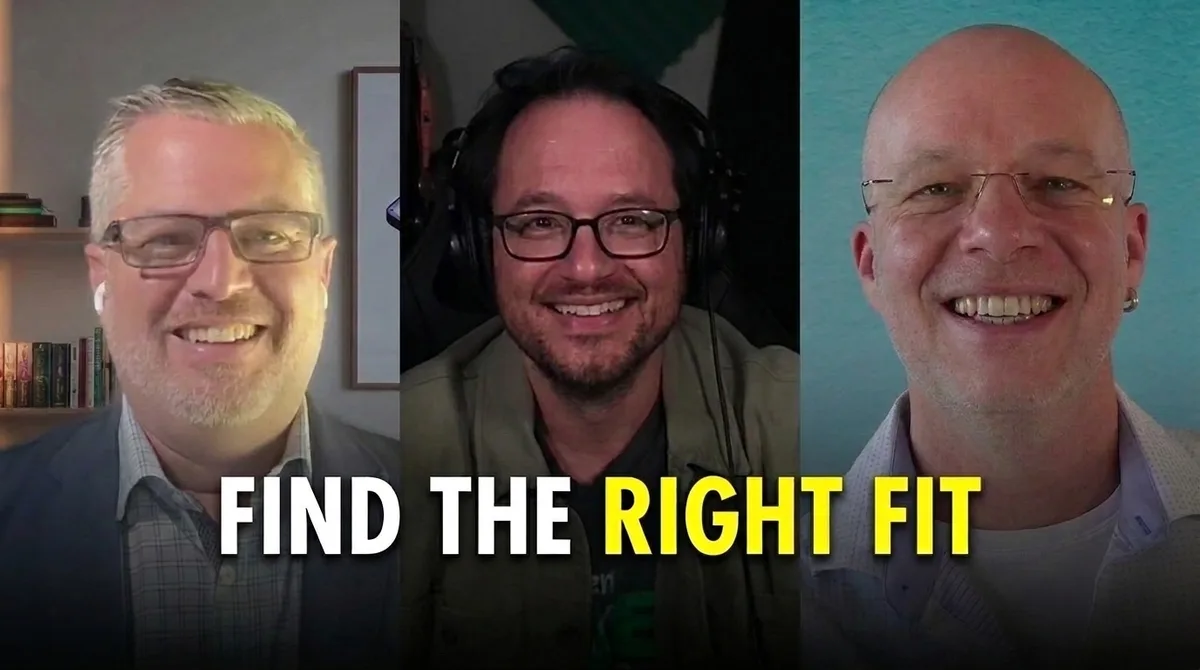 Watch the full episode on YouTube. Every format in one place, including the complete transcript: sigsub.show/episodes/ep-008.
Jump to a segment:
🛒 Analogy of the Week: No Self-Checkout
Ask JD why Trader Joe's still pays a person to ring you up.
Have you ever seen a self-checkout register at Trader Joe's? Nope. No self-checkout, no in-store screens selling you things, no app mining your basket. Every competitor added all three years ago, because those are the moves you make when the goal is to be bigger. But Trader Joe's didn't, because bigger was never the goal. They know exactly what they are: a small store, a curated shelf, and a person who will walk you to the almond butter. And they quietly run the most profitable square footage in the grocery business.
That is influence over reach, drawn as a floor plan. The self-checkout is reach: serve more people, faster, cheaper, everyone at once. The friendly clerk at the register is influence: fewer transactions, the right ones, and a customer who comes back. Trader Joe's chose the register on purpose, and they win the aisle nobody else is even measuring.
The self-checkout is the biggest room. Trader Joe's built a smaller one on purpose, and owns it.
🎵 Closing: Ring It Up Yourself
AI did not just make ideas cheap. It made reach cheaper too: anyone can post fifty pieces of content a day now, feeding the machine, chasing the biggest room at near zero marginal cost. Which is exactly why the biggest room stopped being worth winning. When everyone can flood every channel, the scarce move is the opposite one, to pick the right people and actually change what they do.
Two months in on the show version of Signals and Subtractions, this is a good reminder. We're now available on Substack, on LinkedIn, on YouTube, on Apple Podcasts, on Spotify, and it's tempting to push to Facebook or X/Twitter or any one of a dozen other places. But instead, we'd rather influence you to share this newsletter/podcast with one person this week. If that's not worth our time, nothing else is either. Please reply to let us know if you're enjoying the new format.
Until next week,
Sam Rogers Bagging Groceries, Not Impressions

New here? Subscribe at sigsub.show and the next episode lands in your inbox.
This week's cohost: JD Dillon, 25 years in frontline enablement across Disney, AMC, and Kaplan, and author of The Frontline Enablement Playbook. With guest Josh Felix, who turned a three-and-a-half-minute layoff into five job offers and a website instead of a resume.
Related reading:
- The Crowded Bar (issue 060). When AI makes every resume look great, looking great stops meaning anything. The same reach-is-saturated problem, seen from the applicant's side of the table, and the episode Sam called back to on air.
- All Horsepower, No Radiator (issue 058). Raw capability was never the differentiator, what you do with it is. Reach is horsepower; influence is the radiator.
Presented by The Frontline Enablement Playbook, JD's own book. Getting frontline work the attention it earns, which is this issue's whole point at the scale of 2.7 billion deskless workers.
Get the next one
Free weekly newsletter on Substack. No account needed. Already on LinkedIn? Subscribe there.
One signal, one subtraction, one analogy, every Sunday. Every issue, back to 001.