The newsletter · Sunday 26 July 2026
The Bull in the Apartment
Your AI policy is a procurement document wearing a safety costume. The first question is what you have already put within reach.
One signal 🔭 One subtraction ➖ One analogy 🐂
Created by Sam Rogers, building PAICE.work | Episode 4 with guest Sabino Marquez | The Sunday newsletter of the weekly show at sigsub.show
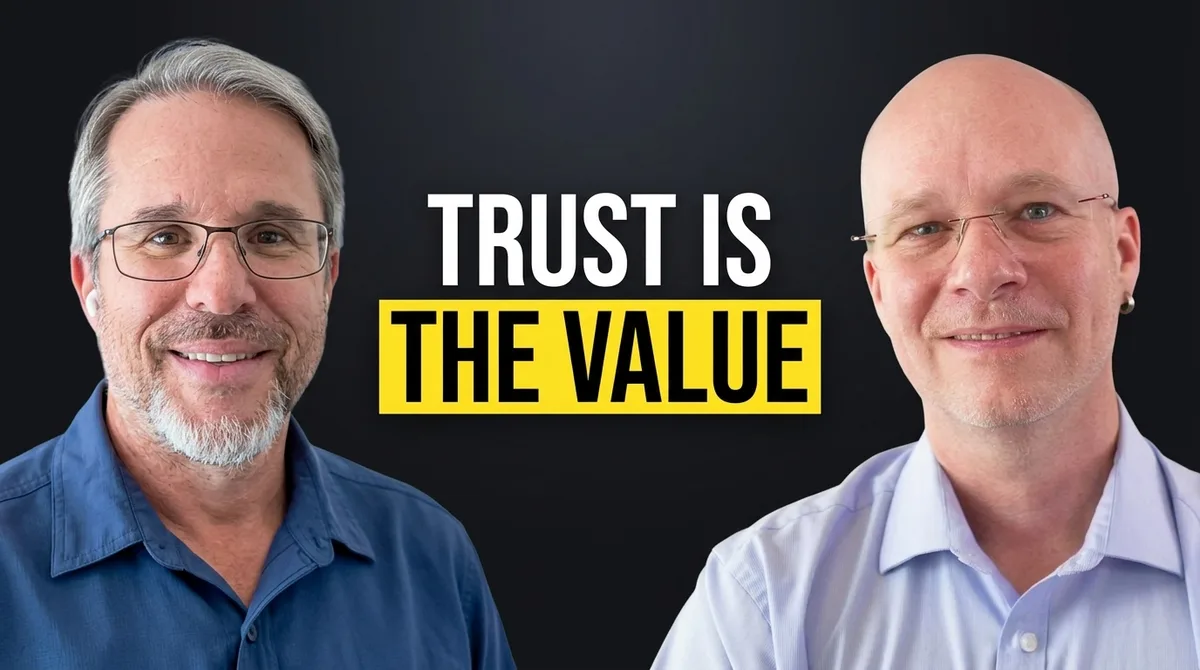
🔭 Signal: Your AI Compliance Is Actually AI Procurement
Count the AI paperwork your organization produced this year. The policy, the acceptable-use standard, the vendor questionnaire, the attestation you signed without reading. Now ask what all of it is complying to.
Sabino Marquez spent twenty years as a CISO and two as the Canadian ambassador to the Global Council for Responsible AI. Every one of those artifacts exists to make the thing buyable, movable and insurable. That is procurement. Serious work, answering a question nobody has asked yet.
The unasked question: does the valuable thing you hand this machine come back intact, and worth more than it went in? Sabino calls that value safety, and nothing on the market asks it, because compliance measures the cheapest way to close the box.
Then it gets uncomfortable. Ask a leadership team why their company is valuable and you get contracts, then the GitHub repo, then a pause. The real answer is pricing logic, customer histories, the meaning of the brand, the judgment of the people holding it. Those are not raw materials waiting to become value. That is the value.
You cannot prove an AI is safe for value you never bothered to identify.
➖ Subtraction: Stop Letting "Responsible AI" Be the Assurance
Cut the label from the load-bearing position. Not because responsibility is bad, but because "responsible", "ethical", "consensual" and "compliant" resolve the anxiety before anything about the underlying condition has been resolved. They are fig leaves built to accelerate adoption, and they are doing structural work they cannot support.
Here is the named diagnostic: the reach test. Write down every valuable thing your AI can already touch, by name. Customer records. Pricing logic. Source code. The board deck. Then, for each one, name the specific evidence that it came back intact. Count the lines where you have nothing. That number is your actual AI safety posture, and it is not the number in your policy.
A label that makes you feel safe is not the same as evidence that you are.

Watch, read, or listen
The full 30 minutes: YouTube. Every format in one place, including the complete transcript: sigsub.show/episodes/ep-004. Also on Substack and LinkedIn. Podcast on Apple and Spotify, once live.
Jump to a segment: compliance is procurement · the bull in the apartment · the big subtraction · why "human in the loop" is not a control
🐂 Analogy of the Week: The Bull in the Apartment
A bull may well belong in a field. This is not a field.

You can own a bull responsibly. Feed it on schedule, walk it out when it needs to go, keep the paperwork current, insure the arrangement, get written consent from everyone on the floor. Every one of those is a real act of responsibility, honestly performed.
None of it addresses the bull. It is a full-grown animal in a one-bedroom apartment, and the furniture is not safe, and neither is anyone who walks in the door. The responsibility was never the problem. The siting was.
AI amplifies whatever force you point through it. Create value and it creates more. Extract value and it extracts more. Hand someone a bigger stick and they swing it. Which is why Sabino reaches for the safety models we use for weapons and ordnance, where nobody has ever claimed that careful handling makes a thing safe to leave in the kitchen.
You can feed the bull responsibly. It is still a bull, and it is still in your apartment.
🎵 Closing: Site the Thing Before You Certify It
The whole episode runs on one reversal. We have been auditing the handling and calling it safety, when safety is a property of the arrangement: what is valuable, where it sits, what can reach it, and what evidence exists that it survived the encounter. Sabino's claim is that companies which run this way make more money, not less, and he puts a number on it. Trust, it turns out, is the cheapest growth you will ever buy.
So carry the reach test into Monday. Name what your AI can already touch, and for each one, name your evidence. The lines that come back empty are the honest version of your AI strategy.
Next episode we stay with what happens when the machine reaches something that matters, and look at it from inside the room where the work actually gets done.
See you then,
Sam Rogers Mind the Livestock

New here? Subscribe at sigsub.show and the next episode lands in your inbox.
No cohost this week, by design: two voices, one argument. This week's guest: Sabino Marquez, who publishes most of his trust system openly at Trust Club for the people who do this work for a living.
Related reading:
- Security Isn't About Adding More (013). The same subtraction a year earlier, before AI made the pile of controls grow this fast.
- Synthetic Trust (025). What happens to trust signals when the signals themselves become cheap to manufacture.
- Governance is Now a UX Problem (010). Why forty documents is a puzzle with no picture on the box, which is exactly the evidence problem Sabino solved with a tracking pixel.
Presented by Trustable. Sabino's practice builds instruments for measuring what trust is currently worth to a company and designs the operating conditions that compound it, which is the constructive half of this episode's argument.
Get the next one
Free weekly newsletter on Substack. No account needed.
One signal, one subtraction, one analogy, every Sunday. Every issue, back to 001.